Google Ads
Budget Pacing and Seasonality: Spending the Right Amount at the Right Time
Most accounts spend a flat monthly budget into a demand curve that is anything but flat. Here's how to pace spend against actual demand, handle peaks without resetting the learning, and stop the end-of-month scramble.

PPC & Creative Strategist
Two patterns show up in almost every account I audit.
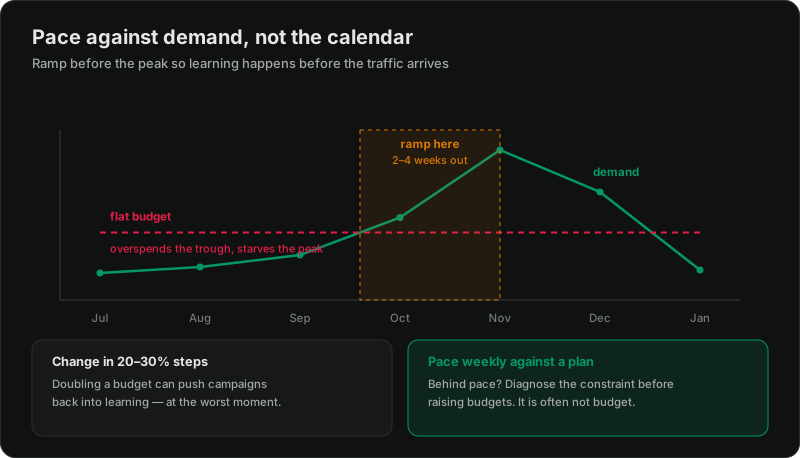
The first: a flat daily budget running all year into demand that is emphatically not flat. The second: the end-of-month scramble — three weeks of underspend, then a panicked push that buys the worst traffic of the month at the highest prices.
Both are pacing problems, and both are fixable without spending a peso more.
TL;DR
Find your actual demand curve
Before pacing anything, you need to know what the year looks like. Three sources, in order of usefulness:
1. Your own sales data, 2–3 years back, by week. This is the real answer — it reflects your customers, not the category.
2. Search volume seasonality for your main terms. Useful where you lack history, or for spotting demand you haven't been capturing.
3. Your account's own conversion-rate-by-month. Often the most overlooked signal: the same click is worth more in some months than others.
You're looking for two things — when demand rises, and how far ahead of the peak the *research* starts. That lead time is what you actually pace against, because the person buying in December started looking in November.
The rules that matter
Ramp before the peak
Bidding algorithms need conversion data at the new spend level before they perform well at it. Jump the budget on the first day of your peak and you spend the most important week in a learning phase.
Start ramping two to four weeks out. By the time demand actually arrives, the system has already learned at the higher level.
The same applies in reverse: come *down* gradually after a peak. A sharp cut can destabilise bidding just as much as a sharp rise.
Move in steps, not leaps
Large sudden budget changes can push campaigns back into learning. As a working rule, 20–30% at a time, then let it settle for a few days before the next step.
If you need to double spend for a seasonal peak, that's three or four steps over a couple of weeks — which is exactly why you start early.
Pace weekly against a plan
At the start of the month, write down what you intend to spend and what you expect back. Each week, check actual against plan.
This one habit removes the month-end scramble entirely.
Don't let the calendar month define you
Budget is an accounting convention; demand isn't. If your peak straddles two months, plan the *campaign* period and let the monthly numbers fall where they fall. Explain that to whoever approves budgets before it happens, not after.
Handling the big retail peaks
For Philippine ecommerce the calendar is dominated by the double-digit sales and the Christmas run — the tactical playbook is in the BFCM and 11.11 / 12.12 playbook. The pacing principles:
When you genuinely can't spend more
Sometimes the constraint isn't budget at all:
Recognising which of these you're hitting is more valuable than any bid adjustment.
A simple monthly rhythm
1. Month start: set the plan — expected spend, expected conversions, known events.
2. Weekly: check pacing, diagnose variance, adjust in steps. Part of the weekly PPC routine.
3. Two to four weeks before a known peak: begin ramping.
4. After the peak: step down gradually, and review what the period actually returned by cohort.
5. Quarterly: revisit the demand curve with fresh data.
Want a pacing plan built?
Most accounts don't need more budget — they need the budget they have arriving at the right time, in the right steps. Building that plan against your real demand curve and capacity is part of my performance marketing strategy work.
Related reading:

Written by
Vince Servidad
PPC & Creative Strategist
I find why paid traffic is not turning into customers, then fix it. Google Ads, Meta Ads, creative strategy, landing pages, Shopify development, conversion tracking.
Apply it to your account
Need help applying it?
Share your website, goal and current setup. We can discuss whether the project is a fit and agree on the scope before work starts.
Get a project review ↗